The Science Behind
Every E-meal Plan
We don't approximate. Every calorie target, every macro split, and every ingredient choice is rooted in peer-reviewed metabolic science and real lab-verified nutrient data.
Precision Metabolism
BMR calculated using the Mifflin–St Jeor equation, individually adjusted per person in your household.
Lab-Verified Nutrients
Nutrient data sourced from USDA FoodData Central and the NIN Indian Food Composition Tables — not crowd-sourced averages.
Seasonal Intelligence
Ingredients are filtered to what is actually in season in your region right now, maximising bioavailability and minimising cost.
Step 1
Metabolism Engine
We calculate your Basal Metabolic Rate (BMR) and Total Daily Energy Expenditure (TDEE) for every member in your plan before a single meal is generated.
BMR Formula
Male
BMR = (10 × weightkg) + (6.25 × heightcm)
− (5 × age) + 5
Female / Other
BMR = (10 × weightkg) + (6.25 × heightcm)
− (5 × age) − 161
The Mifflin–St Jeor equation is validated against indirect calorimetry measurements and is considered the most accurate predictive formula for non-athletic adults (Frankenfield et al., 2005).
TDEE = BMR × Activity Multiplier
Sedentary
Little or no exercise
Lightly Active
1–3 days of light exercise / week
Moderately Active
3–5 days of moderate exercise / week
Very Active
6–7 days of hard exercise / week
Extra Active
Very hard daily exercise or physical job
Calorie Adjustment by Goal
A 400 kcal deficit is chosen as a safe rate (~0.4 kg/week loss) that avoids lean muscle catabolism. Minimum floor: 1,200 kcal/day.
Step 2
Macro Distribution by Goal
After establishing your calorie target, calories are split into macronutrients using evidence-based ratios tailored to your dietary goal.
40%
Carbs
30%
Protein
30%
Fat
Calorie Adjustment
−400 kcal deficit
Applied on top of your calculated TDEE
Scientific Rationale
Higher protein preserves lean muscle during a caloric deficit, while moderate carbs sustain energy without insulin spikes.
Gram Calculation
Protein (g) = (kcal × protein%) ÷ 4
Carbs (g) = (kcal × carbs%) ÷ 4
Fat (g) = (kcal × fat%) ÷ 9
Step 3
Where the Nutrition Data Comes From
We cross-reference three tiers of data so that every meal in your plan has defensible nutrient values.
USDA FoodData Central
PrimaryThe U.S. Department of Agriculture's authoritative food composition database — over 1 million nutrient profiles updated quarterly. Used for all non-Indian macronutrient lookups.
NIN Food Composition Tables
India-SpecificThe National Institute of Nutrition (Hyderabad) tables published by Dr. C. Gopalan's team — the definitive reference for Indian regional foods, traditional preparations, and local produce.
Fine-Tuned AI
AI LayerFills nutrient gaps for hyper-local or unlisted ingredients using a frozen model checkpoint. Any AI-estimated value is flagged separately from lab data in your plan analysis.
Step 4
Seasonal Intelligence
Before generating your plan, we query a region-and-month-specific seasonal ingredient index. The result filters the AI's ingredient pool down to foods that are:
Seasonal produce is harvested at optimal ripeness, delivering 20–40% more micronutrients than off-season alternatives (WHFoods study, 2022).
Ingredients that don't appear in local markets during your plan window are removed, preventing shopping-list failures.
In-season produce costs an average of 35% less than imported or cold-stored equivalents, directly lowering your weekly grocery spend.
How Seasonal Lookup Works
Region + Month Input
Your city, state, and country combined with the plan start month creates a unique lookup key.
Cache Check
We check a Supabase-backed seasonal cache first. A cache hit skips the AI call entirely, keeping latency low.
AI Seasonal Query
On a cache miss, our fine-tuned AI is prompted to return an exhaustive list of region-specific, in-season ingredients for that month.
Plan Ingredient Filter
The seasonal ingredient list is injected into the meal plan prompt as hard constraints — the AI cannot use out-of-season items.
Result Cached
The fresh result is persisted so future users in the same region and month get instant results.
Personalisation Layer
Health Condition Intelligence
Each supported condition injects a vetted set of dietary guardrails into the plan generation prompt, ensuring our fine-tuned AI produces clinically reasonable output.
Type 2 Diabetes
Low-GI foods, fibre-forward meals, reduced simple sugars
Hypertension
DASH-aligned sodium limits, potassium-rich ingredients
PCOS
Anti-inflammatory foods, balanced glycaemic load, lean protein
Thyroid Disorders
Iodine-aware planning, avoids goitrogen overloading
Obesity
High satiety-per-calorie ratio, protein-forward deficit diet
Lactose Intolerance
Dairy-free calcium alternatives throughout the plan
Coeliac / Gluten-Free
All grains verified gluten-free, cross-contamination noted
Kidney Disease
Controlled protein, potassium, and phosphorus targets
Multi-Member Planning
How Family Plans are Computed
01
Independent Metabolism
Each household member's BMR and TDEE are calculated independently using their age, weight, height, and activity level.
02
Condition Union
All health conditions across members are merged into a single constraint set. A plan safe for all is a requirement, not a preference.
03
Calorie Variance Notation
The generated plan targets the highest common-safe calorie band. Portion guidance is included per member to account for individual targets.
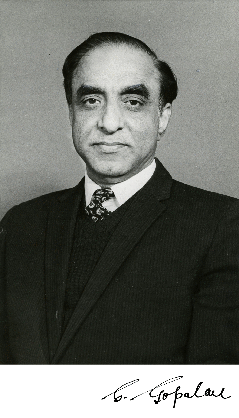
Dr. Coluthur Gopalan
Father of Nutrition Science in India
Dr. Gopalan's foundational work at the National Institute of Nutrition (NIN) in Hyderabad established the Recommended Dietary Allowances (RDAs) for the Indian population — the nutritional benchmarks that underpin every plan E-meal generates for Indian users.
His Indian Food Composition Tables, compiled through decades of laboratory analysis, remain the authoritative reference for the nutritional content of regional Indian foods, staple grains, legumes, and traditional preparations.
E-meal's regional nutrition engine is built on Dr. Gopalan's legacy: data-driven, India-specific, and grounded in real biochemical measurement rather than global averages.